AWARD-WINNING BOOK
Earth
Through the Eyes of Astronauts
Astronauts don’t just document our home planet — they show us where we're from.
EARTH Through the Eyes of Astronauts presents a unified, collective human memory created by hundreds of astronauts over 25 years. It offers an entirely new fine‑art interpretation of astronaut photography, transforming 1.3 million NASA images from the International Space Station (ISS) into sweeping, meticulously crafted panoramas.
With the ISS scheduled to de‑orbit in 2030, the era of continuous human presence in orbit will be relegated to history. EARTH Through the Eyes of Astronauts helps ensure this perspective endures in our collective memory.
“This book offers a view of our planet as only astronauts have seen it, down to the finest detail.
Behind it lies immense passion, years of dedication, and boundless patience, all culminating in an unprecedented achievement.”
— André Kuipers, Mission DELTA 2004 and ISS Expedition 30/31 (2011-2012)
Feel awe & wonder
A curated selection of images from the award-winning book

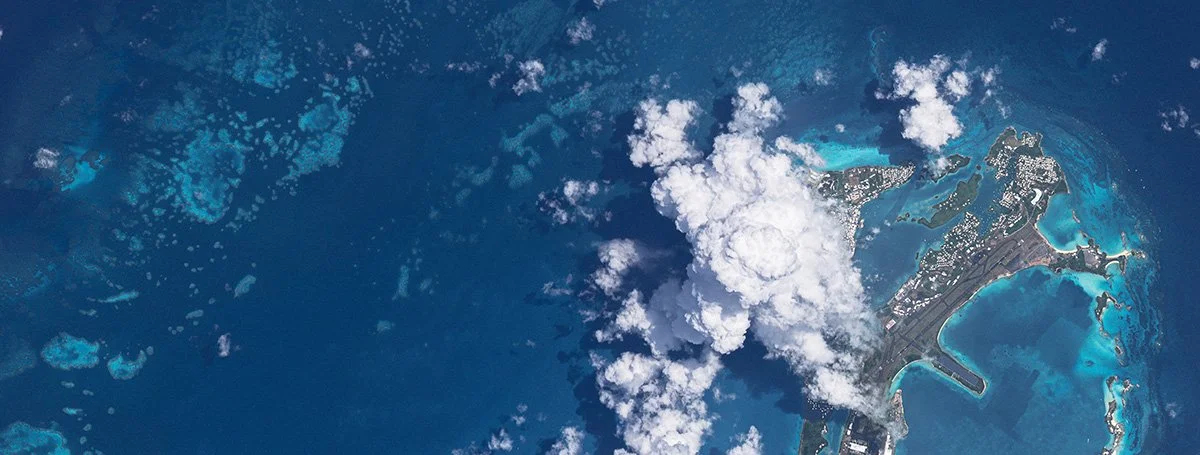


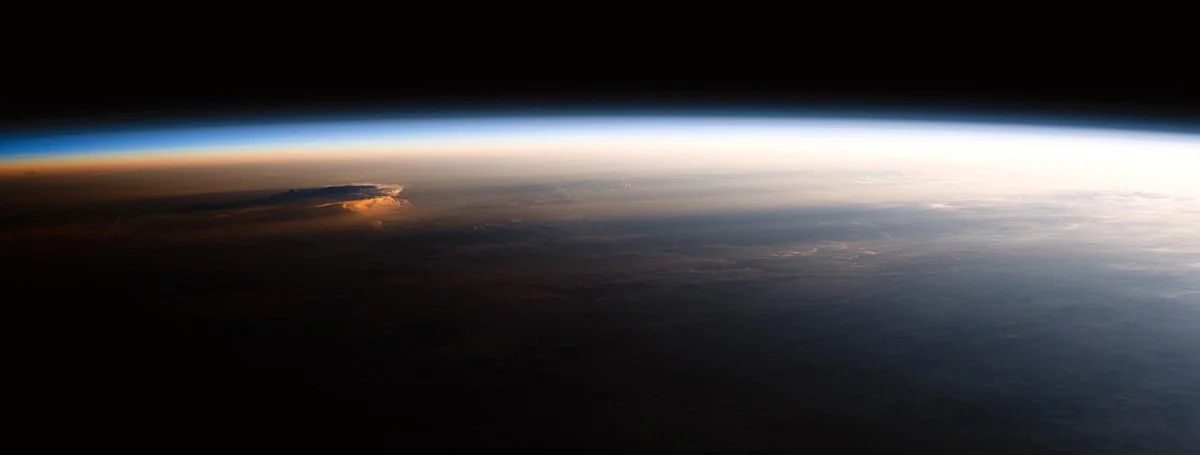

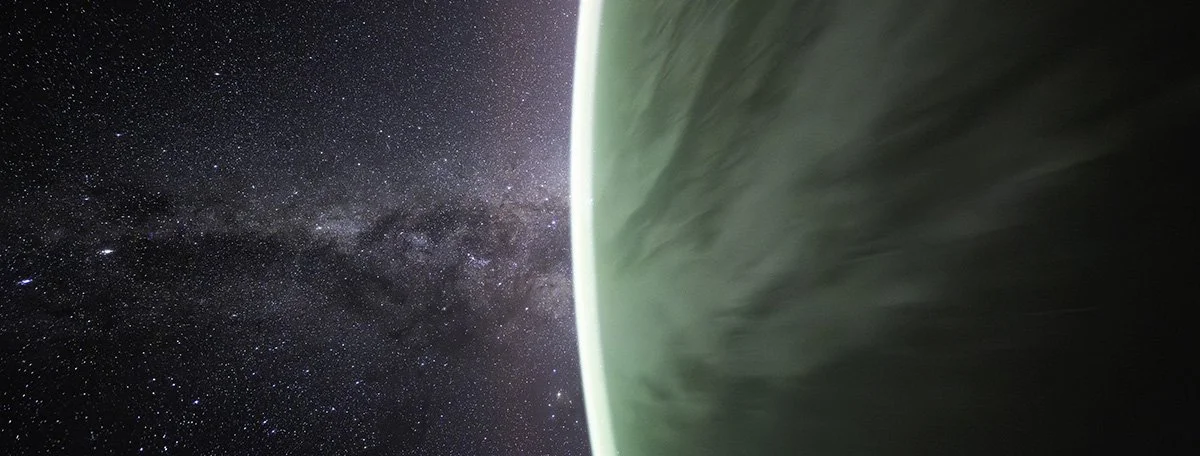

Discover the stories behind the images
Find out how ISS astrophotography has evolved over 25 years, what’s inside NASA’s vast photo archives, and how this book came to life.
-
Brit and I have known each other for quite a few years. We met through her husband, a gifted cinematographer, and it quickly became clear that I was in the company of an exceptionally creative couple.
What began for Brit as a seemingly straightforward project—organizing the photos my two American crewmates and I had taken during our six-month mission aboard the International Space Station (ISS) in 2011–2012—snowballed and took on a life of its own. Nearly 500,000 photos had been captured, making us the most photographically prolific crew up to that point. We couldn’t stop taking pictures and used more than our fair share of bandwidth sending them back to Earth, earning us the occasional reprimand from NASA.
The sheer volume of photos wasn’t earth-shattering. The project began when Brit decided to categorize them by location, a Herculean task that pushed the limits of software. Once Brit found her stride, she began gathering photos from other astronauts who, during later missions aboard the ISS, were irresistibly drawn to capture the most breathtaking—and perhaps unparalleled—view imaginable: planet Earth in all its glory.
All astronauts receive camera training before their flight. This doesn’t make us professional photographers—some have more talent than others—but it equips us to try to capture the beauty of our planet, each in our own way. Most of these photos are taken from the Cupola, a dome-shaped window offering a 360-degree view of our surroundings.
From orbit, our planet glows an almost fluorescent blue. I found it mesmerizing to fly over the Pacific Ocean, past an endless wall of water punctuated only by the occasional turquoise atoll. Over the Sahara Desert, it felt as though we were soaring above the red planet, Mars. The Amazon, rightly designated as a rainforest, was easily recognizable by the countless little clouds hovering above a sea of green. Another breathtaking sight was the boundary between land and sea, which stood out vividly, with sunlight reflecting off the water’s surface. As you can imagine, this extraordinary view keeps astronauts glued to the window for hours, with a dozen cameras and lenses within grasp.
***
The ISS circles Earth at a speed of 28,000 kilometers per hour (17,500 mph). It takes just 92 minutes to complete one orbit, and those of us aboard witness the sun rise and set 16 times a day. That brief moment when the station is bathed in a golden glow for just a few seconds is pure magic. Once on the night side, Earth reveals itself in an entirely different way. It’s as if the planet is wrapped in a black velvet tapestry embroidered with gold. City lights twinkle, roads glow, and somewhere there’s always a thunderstorm in sight, a rapid succession of flashes so bright they illuminate the ISS.
Above Earth’s atmosphere, the starry sky is much clearer than from Earth’s surface. It’s like being enveloped by a great black void studded with stars. The Milky Way is dazzling. We marveled at comet Lovejoy with its long tail and were fortunate to witness a Venus transit, with the planet gliding across the sun like a tiny black speck, an occurrence so rare the next won’t happen until 2117. Space remains a largely unexplored sea of mysteries.
One night, while flying over the Alps, I noticed I could see the lights of Dublin and Oslo, and just by turning my head, simultaneously observe the glow of Cairo on the horizon. This realization caught me by surprise. No single photo could capture this entire view, but as Brit discovered, many astronauts take multiple photos across a region. Seeing the potential, Brit did something remarkable. Using custom-designed software, she found and downloaded these images from the enormous NASA archives and stitched them together like a digital mosaic, creating sweeping panoramas.
This book offers a view of our planet as only astronauts have seen it, down to the finest detail. Behind it lies immense passion, years of dedication, and boundless patience, all culminating in an unprecedented achievement. So come along and witness the incredible beauty of our home planet through the eyes of a space traveler.
— André Kuipers
Mission DELTA 2004
Expedition 30/31 2011-2012 -
Above whispering clouds and colors in their equality, time rolls like thunder fading in the distance.
Peace comforts me like a purring cat, as landscapes transform and disappear,
Thoughts bubble up as the earth turns—just as it has since long before you and I drew our first breaths.
Here, and here, and here is where everyone I ever loved lived out their lives.
There, and there, and there is everyone I can never meet—our paths never crossing.
I’ve crisscrossed the blue for fifty-odd years and chanced upon friends of friends in faraway places,
Yet you and I may never meet again where we both once dwelled.
Such a vast and varied texture of forests, mountains, rivers, fields, and oceans teeming with life.
So many open spaces, devoid of chaos and strife.
You taught me to be unafraid of chasing the horizon.
My path has taken me far and wide, showing me different ways to live.
But no matter where I am on Earth, my home is where love resides.
These images are my gift to you—of memories I will never have.
Those whom I have met and not met have gone beyond the horizon, capturing these in bits and bytes,
So that everyone may dream and feel the awe supreme, as seen from beyond the horizon.
Carpe diem, carpe noctem, dear friend.
Live today, love today.
Live tonight, love tonight.
Do not take tomorrow for granted.
Dew drops, light fades, and youthfulness withers away.
Make peace, pledge love, and give thanks.
Only one thing in life is certain.Until we meet again, above the whispering clouds,
Know that I love you with everything I am.
You will always be my home.— Brit Hammer-Dijcks
-
Home. It’s a simple word, but what does it actually mean? Is it a physical place, or perhaps something emotional, like a feeling?
For me, home has never been a fixed point. I grew up on one continent, with both sides of my extended family on another. From the time I could walk, traveling across time zones between the U.S. and Norway was simply how we stayed connected. I moved to New York City in my early 20s, knowing only one person. My first career took me to Asia several times a year, from South Korea to Sri Lanka, with Hong Kong feeling like a second home. World travel has always been an important part of my life, so it surprised no one when I met my husband while hiking mountains in New Zealand and moved abroad not long after to share life with him.
The shape of my life has unfolded in ways I couldn’t have predicted. Each step broadened my horizons and expanded my circle to include friends from all points of the compass. These connections have enriched my life, so I define home not as a place, but as the connection linking me with the people I care about. That invisible thread gives me a deep sense of belonging, no matter where I live.
But when your world is built on connection, loss can be devastating. How do you find your way back to life? That question echoed inside me after the tragic deaths of two longtime friends on expedition in northern Canada to survey ice thickness. Part of me died with them. One afternoon, home by myself and struggling to process what had happened, I reached out to someone who had offered support, but my call went unanswered. In that moment, I felt alone on the planet. Lying on the floor, fighting off the pull of depression, a vision flashed in my mind of the book you’re holding now. Endings and beginnings often arrive tangled together.
My husband and I had been working with ESA astronaut André Kuipers and held copies of the 472,475 raw photos from his final expedition to the International Space Station (ISS). I’d glimpsed some and knew they deserved to be seen, if only someone would brave the task of sorting through them. I’d already self-published books and had my own photo library of 25,000 images, so how better to lift myself off the floor than to take on this challenge?
***
Browsing through the first thousand images, I set aside the ones that caught my eye and wondered, where in the world is this? The ISS circles the Earth roughly sixteen times a day, so the answer could be almost anywhere. To locate the landscapes pictured, I’d need to know where the ISS was when each was taken. But none of the photos had GPS data.
I turned to NASA’s Gateway to Astronaut Photography of Earth to look up the locations. This was my first time visiting the website, and with so many search options staring back at me, I didn’t know how to start. That’s when doubt first showed its face. I kept going and eventually figured it out, coming away with ISS coordinates for every photo that had piqued my curiosity.
Feeling as though I’d passed some secret initiation, the next step was pinpointing each scene’s location in Google Earth. I entered the first set of coordinates, keeping in mind that astronauts can see nearly half a continent from the ISS. Then I zoomed in and out until I found each landscape pictured. This process took up to twenty minutes. Per photo.
The sheer absurdity of it all gave doubt the upper hand. Was the vision I’d seen even possible? Were there enough beautiful photos to fill a book? Do I even want to do this? With more questions than answers, committing to what I estimated would be a five-year undertaking felt difficult to justify. So I did the only thing that made sense—I walked away.
Still, the idea would not let me go. It chased after me and intruded on my thoughts.
Eighteen months later, I looked at the images again, determined to prove once and for all that the idea couldn’t work so it would leave me in peace. It was a reckoning to face what had been hiding in plain sight: many photos taken across a vast area could be merged into a single, larger picture like pieces of a puzzle. In other words, a composite image. These panoramic scenes invite the eye to wander and, more importantly, reveal a level of detail that no single photo of the same scene could ever match. This insight finally convinced me to take on the project.
There was just one problem: without GPS data, I had no idea where to begin.
-
After months of trying out different solutions, a brainstorming session with my husband led to a two-phase plan: first, reverse-geocode the ISS coordinates in a spreadsheet, then use a software tool to embed the results into the photo metadata. I didn’t even know what those words meant. Reverse geocoding converts latitude and longitude into searchable place names, like a street name or city. Despite feeling overwhelmed, I considered braving this task…until I realized I’d have to learn to code. Thankfully, a programmer friend offered to help.
I began copying ISS data for the half-million photos from NASA’s site into a Google spreadsheet. Now back in familiar territory, everything went smoothly…until I hit an invisible wall. I’d reached the maximum number of cells allowed. Who knew there was even a limit? Shaking off my surprise, I split out the data—into ten spreadsheets.
My friend worked several evenings to tackle the reverse geocoding, converting sets of coordinates for each photo to state/province and country. Meanwhile, my husband typed up instructions so I could run the software program to embed all spreadsheet data into them. I knew I could manually organize the massive photo library if I had to, but their help saved me from powering through alone.
Finally, the day came when I imported 472,475 images with embedded ISS locations into a photo database. I savored this big moment. Too bad it didn’t last long. Many thousands had been taken over water, so reverse geocoding couldn’t generate a place name. It was a classic case of one step forward, two steps back. The workaround was to manually tag every image missing a location. And yes, it was tedious. But those tags were essential.
Two very long weeks later, I was finally at the starting line and ready to begin stitching composites. At first, it was pure trial and error. I had no idea which photos belonged together, so I experimented. My aging laptop took its sweet time. Sometimes I waited twenty minutes for a composite—or an error message. When it worked, the results could be mesmerizing.
***
Occasionally, I’d indulge myself by zooming into a newly stitched panorama to explore it. Some excited me enough to research their locations on the spot. One early favorite was the snow-covered volcanoes on Russia’s Kamchatka Peninsula, now included in this book. The rush of watching scenes assemble was intoxicating. In my happy place, I got lost for hours stitching panoramas.
After several months, I’d created more than 5,000 composites. Some merged dozens of frames into a single image, pushing both my computer and software to the limit. The only problem was that they were so vast, it was hard to know where to look. So I began cropping them in different ways, framing compositions to guide the eye. Before I knew it, I’d made more than 12,000, with each crop emphasizing a different part of the scene. Through this process, the once-alien view of Earth from space—a perspective most of us will never witness firsthand—had become oddly familiar.
Now it was time to tame the chaos I’d created. The images needed to be organized by subject location, rather than by where the ISS was when they were taken, since that view spans nearly half a continent. Using the tags, I created database rules to automatically sort images into folders by region. This made it easy to spot any that didn’t belong and saved me time researching on Google Earth. The folders also helped me compare images of the same scenes to select the most striking ones. That’s why those tags were so important.
Three years into the project, I’d organized 472,475 photos and stitched the composite images. Now, work on the book could finally begin. Using the unretouched composites, I iterated until I landed on the first version I liked. But something was missing, and I couldn’t quite put my finger on it. I kept creating new versions until, eventually, it dawned on me: every time André spoke about his time aboard the ISS, his eyes lit up. Looking at the cropped panoramas, I felt it too. That’s when the vision that had gotten me off the floor finally made sense. Wonder and awe was the theme for this book.
-
The next step should have been easy, right? But no. After narrowing the crops down to the best 500, I saw that the focus was very soft on many. Worse, the book felt one-dimensional—just a series of nadir views of Earth. What I needed now were images showing the planet’s curvature. But absurdly, only twelve out of half a million photos gave me a sense of awe. I was at an impasse.
Crushed, I walked away from the project.
A few months later, I came back, fiercely determined to make the book I had envisioned. I expanded the project to include other ISS expeditions. My decision was not made lightly. It triggered a cascade of new challenges, starting with the need to download photos. Steeling myself, I copied data from every ISS expedition, resulting in dozens of spreadsheets plus a master overview to keep track of them all. Then, I rolled up my sleeves and got to work.
Although endurance had never been my problem, it was important to pace myself. I was on a quest for the sharpest, most beautiful photos. Finding them was a numbers game, a manual process of elimination. I began downloading photos strategically, prioritizing missions with newer cameras onboard. Then my husband surprised me by building proprietary software that unlocked the full potential of my spreadsheets, allowing me to download photos in batches by the thousands—far beyond the NASA website’s 100-photo limit. It was a game-changer. Progress was now dictated by my internet connection and NASA’s server speed. Months rolled by as I settled into a rhythm of downloading up to 16,000 photos by day and merging them with spreadsheet data at night. At least my database now handled the reverse geocoding. If only tagging and stitching composite images went faster…
Challenges still popped up, but now they were easier to solve. When my 8TB hard drive ran out of space, I saved up and bought one with 20TB. When my laptop couldn’t stitch composites and run the database at the same time, I laughed. What kept me going was the view of Earth, with its reminder to keep moving forward. So I did. Six years into the project, the big day arrived when I knew in my bones that there were enough images for this book. Finally, I could stop pushing the boulder uphill—and exhale.
***
By now you might be wondering what’s inside NASA’s vast photo archives. It dates back well before the first ISS photos taken in 2000. Beyond iconic Apollo images, the archives hold rare photos of the ISS under construction, taken from Space Shuttle orbiters. Also included are breathtaking views of orbiters against Earth’s backdrop, shot from the ISS. These photos weren’t intended for gallery walls or coffee table books like the one you’re holding, and most may never see the light of day, but they deserve to be celebrated.
More than eight million photos taken from the ISS alone, captured during its first 25 years, are available to the public. I downloaded 800,000 from various expeditions, beyond the 472,475 I’d already reviewed. That’s when I realized how far space photography had come.
The evolution of cameras from analog to digital in the early 2000s brought a profound shift in how astronauts document our planet. ISS Expedition 6, in 2002–2003, was the first to take photographs intended for composite images. As technology advanced, so did photography techniques. Later missions used long exposures, time-lapses, and infrared imaging to capture dancing auroras, star trails, and the unseen beyond the visible spectrum. Not surprisingly, these images had a visual richness that resonated with an ever-growing audience on Earth.
The volume of photos grew alongside advances in camera technology. My spreadsheet project revealed a turning point after André’s final trip to space in 2011–12. Prior expeditions averaged just 23,800 images per mission, but afterwards the average climbed to over 100,000, boosted by a handful of crews that shot 300,000, 400,000, and even 1 million photos. The numbers might sound staggering, but by 2020, camera technology had improved enough to let astronauts capture longer and more continuous time-lapse sequences than ever before. That’s one giant leap for astrophotography.
While statistics make for great party conversation, what impressed me was something else entirely. Beyond the numbers, what stood out was the astronauts’ ability to capture The View. As a photographer, I’d argue that astrophotography from orbit is the most challenging genre, and paradoxically, the simplest task aboard the space station.
-
Every ISS expedition I reviewed produced breathtaking photos of our home planet from space. But capturing that awesome view is far more complex than simply pointing a camera out the window.
Astronauts witness a sunrise and sunset approximately every 90 minutes, an ever-changing lightscape that’s tough to master. The lighting conditions shift constantly—from harsh direct sunlight to deep shadow, from golden-hour glow to the inky blackness of night—all within the span of a single orbit. Now imagine trying to nail the right exposure and capture a sharp photo while shooting handheld, floating in zero gravity, and moving past your subject at 17,500 mph (28,000 kph), from roughly 400 kilometers above it.
Even the most experienced photographers on Earth rely on stability, patience, and predictable lighting—luxuries that don’t exist in orbit. The ISS itself is in constant motion. Subjects appear and vanish in seconds. There’s no tripod, no do-over, and no chance to wait for better conditions. Astronauts must anticipate the moment, adjust settings on the fly—or choose another camera with a prime lens already set up.
Photographing from orbit is a highly technical endeavor, requiring the right camera settings and techniques. Cities at night are among the most difficult subjects to capture sharply, which is why a large section of this book is dedicated to them. Curious about the greatest challenge? The final photo in this book provides the answer: capturing stars as pinpoints while orbiting Earth, made more complicated by the station’s continuous pitch.
Yet the real magic isn’t the camera or technique—it’s in the photographer behind the lens. Astronauts do more than document Earth’s surface. They show us where we’re from. I’ve yet to see a satellite image that captures our home planet with the same reverence humans do. If I could make one wish, it would be for astronauts to photograph the entire planet, but the space station’s orbit never passes over the northernmost and southernmost regions.
***
After working with the images for many years, I understand why astronauts feel compelled to photograph the entire planet, but including everything in one book would have been beyond the limits of modern bookbinding. I actually tried, and the page count soared past one thousand. To create the book I envisioned on the floor, I needed to focus on the essence.
Deciding what to include turned into a years-long process of refinement, and I often found myself going in circles. This phase evolved in concert with the lithography work, which came with its own steep learning curve. Paradoxically, the first phase—reviewing 1.3 million photos and stitching more than 7,000 composite images—was more straightforward.
Guided by a fine art photography ethos, I remastered the strongest composite images, along with select individual frames that flesh out the book, after researching each location’s true colors. Some required only simple processing to draw out the details; others demanded much more and involved considerable trial and error. Throughout, I’ve tried to stay faithful to the spirit of the scenes.
It might not surprise you that the book in your hands ultimately took more than ten years to complete—twice the time I had anticipated. Along the way, it brought me back to life and helped me weather the many losses that followed. I present it as a meditation on the meaning of home and an homage to the astronauts who showed it to us.
This collection of images unfolds as a journey, tracing a poetic arc through day and night rather than a literal orbital path. Beautiful scenes stretch across every page, culminating in a final view of Earth, with the Milky Way shimmering beyond it. While a book can only offer a glimpse of our planet at its most beautiful, my hope is that this one fills you with a sense of wonder and awe. This is Earth. Welcome home!
-
Millennia of history are written on the surface of our home planet, whether in impact craters, dry beds of vanished seas, or rock art created by Indigenous peoples. Landscapes hold the memories of countless generations who have lived, loved, and died here.
Across time and cultures, we’ve looked upward to the cosmos and wondered what lay beyond the horizon. I became part of that continuum shortly before the first human stepped foot on the Moon. Seven years later, I stood beneath real spacecraft at the newly opened Smithsonian National Air and Space Museum in Washington, D.C. Although I was too young then to fully understand what I was seeing, it sparked my curiosity.
Decades later, I found myself at a kitchen table with an astronaut. The excitement on André’s face as he spoke about seeing Earth from orbit reminded me of what I had seen as a child and rekindled my curiosity, igniting my interest in space photographs.
When I began this project, I did so with the same childlike curiosity that had guided my life. My approach was simple: start wherever you are, follow the questions that arise, and learn what is needed along the way. This philosophy shaped both my life journey and my evolving relationship with the material.
Every image presented here, whether a composite or a single frame, first answered four questions: Is it interesting? Is it sharp across the frame? How easily can I fix damage? Does it both stand strong on its own and strengthen the collection?
These questions marked the threshold. Stepping through it led me down an exciting rabbit hole: do people live there, what is the climate like, and why does the land look the way it does? I found the answers in many places—from NASA’s Earth Observatory and National Geographic, to documentary films, scientific papers, the CIA’s World Factbook, and tourism blogs in multiple languages.
***
Research went hand in hand with the first of three stages of image remastering. Each round revealed more of the story behind each scene, until I came to know each image as I would a close friend.
In the first stage, I corrected colors by cross‑referencing other ISS photographs of the same scene, added contrast and clarity, and repaired defects—a process that often took several days per image. In the second, I drew out inherent details and refined tonal clarity. The final stage polished the series into a unified collection, ready for print.
Remastering is not a linear process, though I have described it that way. It is subjective, iterative, and fluid, requiring time between each round to return with fresh eyes.
My goal in remastering was never technical perfection. I wanted to convey the emotional experience of witnessing the scale and grandeur of these landscapes from 400 kilometers above—to bring the view of Earth from orbit as close as possible to those of us who may never see it firsthand.
The collection of images presented here is not merely a record of Earth’s surface, but of memories carried by hundreds of astronauts. They alone crossed the horizon and showed us our home planet from space.
Seen through their eyes, views of Earth have become part of our collective consciousness, shaping our history—and our identity. From their vantage point, freed from gravity, the impossible becomes possible. We are invited to dream, to wonder what lies beyond the safety of home, and to venture over the horizon—into the vast, uncharted unknown…
about the author
Brit Hammer‑Dijcks is an award‑winning visual artist whose 8K/12K immersive Earth experiences merge fine‑art photography with NASA imagery. Her work has been featured internationally in films, museums, and architectural installations, inviting viewers to rediscover awe and wonder through the eyes of astronauts.